Podcasts

American Cattlemen Podcast

Welcome to the American Cattlemen Podcast, hosted by Gale McKinney, where information, entertainment, and the cow/calf industry come together. Whether talking to a country western entertainer, cow/calf producer, or industry professional, ACP promises a different ride than other podcasts.

Welcome to American Cattlemen’s Producer Profiles where Gale brings the business and lifestyle of the Cow/Calf industry together. Whether it’s the most recent production sale to your local county fair Gale brings you interviews with the grassroot folks of the industry.

Our audience is United States cow/calf producers and worldwide industry professionals derived from our extensive social media following of over 500,000 unique industry professionals. Each episode of the American Cattlemen Podcast will be promoted through our digital outlets and the American Cattlemen magazine and newsletter.

Previous Episodes

701X Cattle Con 2026

Welcome back to the American Cattlemen Podcast. Just ahead, we have Dustin Hector, he’s the Director of Business Development for American Cattlemen Media, and he sits down with Chip Kemp, Chief Strategy Officer for 701X, Cattle Con 2026. 701X

Chip frames the bull as a ranch’s “most important employee,” noting that producers invest heavily in him but historically have had little real-time insight into his activity, health, or location. With 701X devices, producers can continuously monitor bulls and other cattle, knowing where they are, when they are mounting cows, and when early signs of health issues emerge—often before they are visible to the human eye.

The conversation broadens to the role of technology in ranching. Chip acknowledges the nostalgia for earlier, simpler times but compares modern tech adoption to choosing a cab tractor over an old Ford 8N: once the benefits are clear, most people would not go back. He stresses that skepticism often stems from past overpromises by “charlatans,” and contrasts that with 701X’s engineering-first, ranch-informed approach that actually delivers on what it claims.

Dustin and Chip emphasize that good technology allows producers to be proactive instead of reactive. Examples include integrated water monitoring, calving alerts, and stress or no-movement alerts that can prevent death loss or losses from breeding inefficiencies. Chip shares a story of an alert that allowed a family member with physical challenges to save a calf from a dangerous waterway, turning what would have been a loss into preserved value for the operation.

Throughout, Chip returns to the idea of “technology enhancing tradition.” The goal is not to replace hands-on animal husbandry, but to use data and smart tools to allocate time and labor more efficiently, support multi-generational continuity, and help small family outfits remain viable and competitive in a modern marketplace.

For previous episodes of the American Cattlemen Podcast, please visit:  www.americancattlemen.com.

American Cattlemen Podcast is Sponsored By:

Moly Manufacturing

Central Life Sciences


Pollard Farms 27th Annual Spring Sale

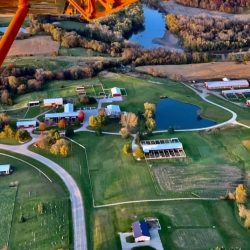
Welcome back to Genetics & the Gavel, powered by American Cattlemen Media. Just ahead, we Gale McKinney, he’s the owner of American Cattlemen Media, and he chats with Jeremy Leister, Ranch Manager of Pollard Farms. In this episode, Jeremy and Gale will dive into the Pollard Farms 27th Annual Spring Bull & Female Sale, held on March 18th, 2026, at 12PM CT, at Pollard Farms in Waukomis, Oklahoma. Pollard

At Pollard Farms, their goal is to produce bulls with superior growth and carcass traits, ensuring customers benefit from the increased value of heavy calves and the substantial grid premiums achieved.

The Pollard Farms program is built around customer service and long-term profitability for buyers. Pollard Farms strives to produce Angus cattle that combine phenotype, structural soundness, and elite EPD profiles, with a particular focus on growth and carcass traits that allow customers to capture premiums on heavy, high-quality calves. Jeremy emphasizes that they are not chasing a single niche; instead, they are using the tools and technology of the American Angus Association, along with carefully selected AI sires and top-end Angus females, to create cattle that work in a wide variety of commercial environments.

The sale is front-loaded with long-age bulls ready for heavy service, including powerful, structurally sound brothers in the first two lots that combine eye appeal with strong numbers. The offering includes sire groups by several prominent AI sires that bring together marbling, performance, and balance.

On the female side, the sale includes first-calf heifer pairs carrying young, fresh genetics, along with proven four- to six-year-old spring-calving cows and a group of fall-bred cows and heifers. Jeremy explains that this variety is intentional, giving buyers the opportunity to start a herd, rebuild numbers, or add quality females in whatever combination fits their program. He also outlines buyer-friendly terms such as breeding soundness exams, breeding-season guarantees, and volume incentives, all designed to support customer success.

For previous episodes of the American Cattlemen Podcast, please visit:  www.americancattlemen.com.

American Cattlemen Podcast is Sponsored By:

Moly Manufacturing

Central Life Sciences


2K Cattle Enterprises 28th Annual Sale

Welcome back to Genetics & the Gavel, powered by American Cattlemen Media. Just ahead, we have Gale McKinney, he’s the owner of American Cattlemen Media, and he sits down with Kelsi Retallick, Co-Owner of 2K Cattle Enterprises. In this episode, Kelsi and Gale will dive into the 2K Cattle Enterprises 28th Annual Performance-Tested Bull & Female Sale, held on March 15th, 2026, at 1PM CDT, at Bloomington Livestock Exchange, in Bloomington Wisconsin. 2K Cattle

At 2K Cattle enterprises, they take pride in heritage and commitment to quality. Their family has been raising Angus cattle for generations, ensuring that each bull sold meets their high standards.

The 2K Cattle philosophy is to avoid extremes and instead build cattle that combine maternal strength, structural soundness, longevity, fertility, and strong growth with an eye on carcass quality and marbling. The goal is for customers to raise calves that get up, grow quickly, and push down the scales, while still producing replacements that make productive, long‑lived cows.

Kelsey also outlines how their broader business model ties together a farm‑to‑table system. The family finishes many of their own cattle, supplying a butcher shop and a steakhouse she opened a couple of years ago. This vertical integration allows them to see firsthand how their genetics perform all the way to the plate, reinforcing the focus on carcass merit alongside maternal traits.

This year’s offering includes 54 yearling Angus bulls and 21 elite bred Angus females. Kelsey reviews the strength of the sire groups represented: Clarity sons from proven donor cows, Kindreds noted for calving ease with frame and pounds, Bedfords with eye appeal and mass, and Top Gun bulls that combine calving ease with performance and are suitable for heifer use. Additional sire lines such as Connealy Comrade descendants, Rise Above, and Growth Fund contribute to a deep, uniform set of bulls that have performed well since weaning and present consistent quality across the pen.

On the female side, Kelsey highlights Lot 55, a lead-off bred female out of an Everelda cow purchased from Deer Valley and flushed multiple times with excellent results. This female calved at the end of December and is raising a promising calf by Baldridge Heat Seeker. The broader group of bred heifers were carefully developed and AI bred to sires like Heat Seeker and Boyd Bedrock, and Kelsey expresses strong confidence in their quality, udders, and future production. All bulls have passed reproductive soundness exams and are sold with a first season breeding guarantee, and the family is committed to working with buyers on trucking and logistics to ensure a smooth sale experience.

For previous episodes of the American Cattlemen Podcast, please visit:  www.americancattlemen.com.

American Cattlemen Podcast is Sponsored By:

Moly Manufacturing

Central Life Sciences


Isa Beefmaster

Welcome back to the American Cattlemen Podcast. Just ahead we have Dustin Hector, he’s the director of business development for American Cattlemen Media, and he sits down with Lorenzo Lasater, President of Isa Beefmaster. Isa

Lorenzo is an Entrepreneurial CEO with 24 years of experience in building, branding, and marketing inside a wide range of businesses, ranging from business printing, retail packaging for manufacturers, hunting and retail, and food service. He is also a 5th-generation rancher and the current president of Isa Beefmaster based in San Angelo, Texas.

The Beefmaster breed emerged as a three-way composite: roughly half Bos indicus and half Bos taurus, from Brahman-type crossed on native Herefords, later adding Shorthorn. Lorenzo explains that this structure gives Beefmasters high built-in heterosis and underpins their reputation for adaptability, fertility, longevity, and efficiency in grass-based systems. Central to the program is the Lassiter philosophy of the “six essentials”: fertility, weight, conformation, hardiness, disposition, and milk production. These traits are selected in balance to maximize economic efficiency rather than aesthetics.

Lorenzo describes how Isa Beefmaster markets its genetics through an annual fall bull sale, spring private-treaty bull sales, bred females and open heifers, and a growing international business in semen and embryos, especially in tropical and desert regions. A direct-to-consumer ranch-to-table beef business launched by his son has provided a way for local customers to experience their product firsthand.

He emphasizes the breed’s adaptability to both heat and cold, with cattle performing from Texas to Montana and even Alaska, while noting their “sweet spot” remains the southern half of the United States and other grass-based, lower-input environments. Looking to the future, Lorenzo is optimistic yet realistic about challenges such as access to land, rising costs, and succession. He stresses the importance of maintaining economic balance in the cattle while modernizing for today’s beef industry and preserving the family’s multi-generational legacy and deep connection to land and livestock.

For previous episodes of the American Cattlemen Podcast, please visit:  www.americancattlemen.com.

American Cattlemen Podcast is Sponsored By:

Moly Manufacturing

Central Life Sciences


Pfaff Angus 2026 Annual Bull Sale

Welcome to Genetics & the Gavel, powered by American Cattlemen Media. Just ahead, we have Gale McKinney, he’s the Owner of American Cattlemen Media, and he chats with Rex Pfaff, Owner of Pfaff Angus. In this episode, Rex and Gale will dive into the Pfaff Angus 2026 Annual Bull Sale, held on March 11th, 2026, at 1:30PM CT, at the Pfaff Angus Ranch, in Fairfax, South Dakota.

At Pfaff Angus, they take pride in heritage and commitment to quality. Their family has been raising Angus cattle for Generations, ensuring that each bull sold meets their high standards. Pfaff

Rex has been farming and ranching since 1978 and has been in the registered Angus business for about two decades. Prior to that, he focused on stock and feeder cattle and learned that pounds of gain are what drive profitability. That philosophy now underpins his breeding program: producing bulls that help commercial cattlemen raise good, high-performing cattle that sell well and bring repeat buyers and premiums on the grid.

Rex describes his approach to cattle selection as strongly rooted in eye appeal and functional correctness. If there is a weakness or “hole” in a cow, he chooses sires that can fill that gap. He emphasizes that buyers of feeder cattle want good, uniform cattle, and when they like what they see, they come back and often pay a premium. On management, he notes that while the cattle are not pampered, he does believe in keeping them in good condition and living by the principle that if you take care of your cattle, they will take care of you.

The offering for the March 11th, 2026, sale includes 44 yearling bulls, highlighted by sons of Bullseye Significant, Eternity, Huffman Bedford, 4M Blockade, and proven herd sires used as cleanups. There are also eight two-year-old bulls primarily from his daughter’s fall herd, giving buyers slightly older, gentle bulls ready to cover cows. In addition, the sale features 10 open heifers out of home-raised cows and cleanup sires, positioned as high-quality females suitable for both established and beginning cattle operations. Six bred cows, largely late calvers ranging from first-calf heifer to nine years old, are offered for the first time as Paff Angus tightens its calving window.

Rex outlines that bulls are fully worked, vaccinated, semen checked, and essentially ready to go to work.

For previous episodes of the American Cattlemen Podcast, please visit:  www.americancattlemen.com.

American Cattlemen Podcast is Sponsored By:

Moly Manufacturing

Central Life Sciences


Berwald Red Angus 4th Bull & Female Sale

Welcome back to Genetics & the Gavel, powered by American Cattlemen Media. Just ahead, we have Gale McKinney, he’s the owner of American Cattlemen Media, and he chats with Seth Leachman and Austin Berwald, with Berwald Red Angus. In this episode, they will dive into the Berwald Red Angus 4th Annual Bull & Female Sale, held on March 11th, 2026, at 1PM CST, at the farm, Toronto, South Dakota. Berwald

Berwald Red Angus has built their program around a select group of genetics from some of the most well established and successful programs in the breed. With these base genetics they have gone into a very intensive ET and AI program to mass produce the kind they like and know will work for their customers. Their main goal in all of this is to build a cow herd of very maternal females that can produce progeny with growth and carcass merit.

Seth explains that he joined Austin about four and a half years ago, when Austin was transitioning from quietly building his Red Angus herd to hosting a full production sale. From the beginning, the goal has been to develop a superior cow herd based on a small number of elite cow families, using intensive embryo transfer and artificial insemination. They now implant 500–600 embryos per year, which accelerates genetic progress by shortening the generation interval and rapidly turning top young females into donor cows. The bulls in the sale largely trace back to just a handful of influential cows, creating consistency and uniformity throughout the offering.

The 2026 sale will feature around 125 bulls, including Red Angus, black Red Angus gene carriers, and some Simmental-influenced cattle. Seth and Austin highlight several standout sire lines, such as Berwald Destiny 3138, whose first sons and daughters sell this year, and high-impact sires tied to prominent cow families like J-Lo 007 and the 0018 cow. They emphasize structural soundness, especially foot quality, a priority shaped by Austin’s dairy background and years spent scrutinizing feet and leg structure. Carcass merit is another focus, with one lead bull posting exceptionally high marbling and ratio figures.

In addition to bulls, the sale includes registered open heifers drawn from the very top of the replacement pen, many of them direct daughters or full sisters to leading herd sires and donors. Austin and Seth stress that these are females they would happily retain themselves. The program also offers a strong group of commercial open heifers, representing the same cow families and genetic base as the registered cattle.

For previous episodes of the American Cattlemen Podcast, please visit:  www.americancattlemen.com.

American Cattlemen Podcast is Sponsored By:

Moly Manufacturing

Central Life Sciences


Heim Cattle Company 12th Annual Production Sale

Welcome back to Genetics & the Gavel, powered by American Cattlemen Media. Just ahead, we have Gale McKinney, he’s the owner of American Cattlemen Media, and he chats with Nate Heim, Owner of Heim Cattle Company. In this episode, Nate and Gale will dive into the Heim Cattle Co. 12th Annual Production Sale, held on March 14th, 2026, at 1PM CT, at Heim Cattle Co. St Charles, Minnesota. Heim

Over the years, Heim Cattle Co. has remained focused on identifying and developing genetics that work for their customers across the country. Every animal in their sale has been carefully selected for genetic merit, structural integrity, and real-world performance.

Nate’s grandparents ran a dairy until the early 1990s, while his father focused on crop farming and seed sales. When Nate returned from college, he was encouraged to bring his own enterprise to the table, which led him to registered Black Angus cattle. Inspired by an early experience at a Pine View Angus sale and guided by industry mentors like Chris Earl and partner Mike Brummel, Nate built a seedstock operation emphasizing functional, carcass‑driven genetics.

Heim Cattle Company’s philosophy centers on cattle that grade prime while remaining structurally sound and practical for commercial producers. Nate stresses the importance of good feet, bone, and adaptability across environments, along with fertility, unassisted calving, vigorous calf growth, and end‑product value. The 2026 sale offering includes a large group of Angus bulls, both yearlings and older, plus registered heifers, genetic opportunities, and a significant set of commercial spring‑bred heifers.

Nate walks through key sire groups such as Red State, Dutton, Clarities, Rock Creek Whitewater descendants, and Pappies, explaining how each contributes frame, performance, marbling, and structural quality. He highlights particularly influential donor cows like H2 42 from Green Valley and C113 from Pine View, whose progeny have shown exceptional consistency and strong EPD profiles. Open and bred heifers were selected from the top of the herd, with some carrying embryos from elite matings to give buyers added genetic upside.

The program also discusses how bulls were developed on corn stalks rather than concrete to improve structure and let genetics express differences more naturally.

For previous episodes of the American Cattlemen Podcast, please visit:  www.americancattlemen.com.

American Cattlemen Podcast is Sponsored By:

Moly Manufacturing

Central Life Sciences


Falling Timber Farm 17th Bull & Female Sale

Welcome to Genetics & the Gavel, powered by American Cattlemen Media. Just ahead, we have Aaron McKinney, he’s the Field Editor for American Cattlemen Media, and he sits down with John and Heidi Ridder, Owners of Falling Timber Farm. In this episode, they will dive into the Falling Timber Farm 17th Annual Bull & Female Sale, held on March 21st, 2026, at 5:30PM CST, at Falling Timber Farm, Marthasville, Missouri. Falling Timber Farm

Faling Timber Farm’s Focus has always been on balanced trait selection, and they have not chased the fads of the show ring, although they have bred many show winners over the years. The main focus is on being a seedstock supplier for the beef industry.

ohn explains that the land has been in his family since the mid-1800s, with Hereford cattle on the place since the early 1900s. The registered herd was started 50 years ago by his parents, combining his mother’s strong background in the shorthorn business and his father’s experience on the judging team at the University of Missouri. They built the foundation herd by purchasing open heifers from several established performance-tested herds across the Midwest and then steadily improving genetics over time.

John describes how artificial insemination became central to their program. For roughly three decades, they have AI’d most of their cows, then retained and used home-raised bulls from their best cow families. This approach, focusing on knowing both sides of the pedigree, helped them move quickly past historical Hereford problems and build a highly functional, reliable herd.

Heidi shares that she did not grow up on a farm but joined this lifestyle through her relationship with John and has been a core part of raising both cattle and children. Their two college-age children remain closely connected: their daughter is in veterinary school, and their son is studying agricultural systems technology with plans to return to the farm. The family aspect extends across generations, with John’s parents still actively involved in daily work.

The Falling Timber Farm Philosophy focuses on producing Hereford cattle that excel as maternal, problem-free cows, recognizing that many commercial producers use Herefords to add heterosis and create high-quality Baldy females. They emphasize moderate birth weight, strong calving ease, teat and udder quality, sustained fertility, and sound structure over chasing extreme carcass traits.

For previous episodes of the American Cattlemen Podcast, please visit:  www.americancattlemen.com.

American Cattlemen Podcast is Sponsored By:

Moly Manufacturing

Central Life Sciences


Skip to content