Podcasts

Welcome to the American Cattlemen Podcast, hosted by Gale McKinney, where information, entertainment, and the cow/calf industry come together. Whether talking to a country western entertainer, cow/calf producer, or industry professional, ACP promises a different ride than other podcasts.
Welcome to American Cattlemen’s Producer Profiles where Gale brings the business and lifestyle of the Cow/Calf industry together. Whether it’s the most recent production sale to your local county fair Gale brings you interviews with the grassroot folks of the industry.
Our audience is United States cow/calf producers and worldwide industry professionals derived from our extensive social media following of over 500,000 unique industry professionals. Each episode of the American Cattlemen Podcast will be promoted through our digital outlets and the American Cattlemen magazine and newsletter.
Previous Episodes
The Drake Simmental Bull and Female Sale Jan. 30, 2026
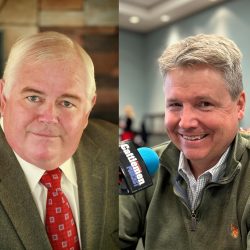
Welcome back to the American Cattlemen Podcast. Just ahead, we have Gale McKinney, he’s the owner of the American Cattlemen Podcast, and he sits down with Flint Drake and Mason Harlan of Drake Simmental, Centerville, Iowa. In this episode, they will dive into The Drake Simmental Bull and Female Sale held on January 30, 2026. 
The Drake family began raising cattle in the rolling hills of southern Iowa as soon as their ancestors arrived by covered wagon in 1854. Their path to accelerated genetic improvement and seedstock production began with Charlie Drake, Larry Drake’s father. Today, Drake Simmental is comprised of three operations: Iron Creek Cattle Company, Drake Simmental, and Harlan Cattle Company.
Flint explains the Drake Simmental philosophy of matching cattle to the environment, prioritizing structurally sound animals with moderate frames, good maternal traits, and calving ease. This balanced approach, he emphasizes, avoids extremes in genetics, ensuring that cattle remain productive and efficient while thriving in real-world commercial operations.
Mason then details their current offering of both age advantage and yearling bulls, which consist of purebred Angus, Simmental, and Angus-sired animals. He describes the bulls as dense and powerful, particularly praising the Haymakers, Jacksons, and Knockouts for their growth, calving ease, and overall performance. There is a noted balance between age-advantaged and yearling bulls, with yearlings outnumbering the aged group.
They then get into the female group, with a focus on the notable jump in genetic value among the heifers this year. The Jackson heifers stand out for their balance, maternal traits, and calving ease—some reaching donor quality. The Matron of Honor donor cow remains influential, producing high-value bulls, and the calving window for heifers begins in early to mid-February.
For previous episodes of the American Cattlemen Podcast, please visit: www.americancattlemen.com.
American Cattlemen Podcast is Sponsored By:
Nichols Farms Superior Beef Genetics Sale
Welcome back to the American Cattlemen Podcast. Just ahead, we have Gale McKinney, he’s the owner of the American Cattlemen, and he sits down with Ross Havens of Nichols Farms in Bridgewater, Iowa. In this episode, Gale and Ross dive into the Nichols Farms Beef Genetics Sale, with opening day on January 24th, 2026. 
Nestled in the picturesque heartland of Bridgewater, Iowa, Nichols Farms stands as a beacon of agricultural excellence, sustainability, and innovation. For generations, this family-owned and operated farm has been dedicated to nurturing the land, raising healthy cattle, and advancing the future of agriculture. Founded on timeless values and a deep love for the land, Nichols Farms has evolved into a model of modern agriculture. With roots that run deep in Bridgewater, they have always believed in responsible land management and sustainable cattle practices. Their commitment to environmental stewardship has not only preserved the natural beauty of their surroundings but has also led them to become regional award winners in recognition of their conservation efforts.
Nichols Farms works with a variety of breeds—Angus, Simmental, and South Devon—advocating for crossbreeding to improve production, fertility, and longevity. Hybrid lines and composite cattle are a key component, benefitting both small and large operations. Bulls offered at the sale are performance tested and selected based on data, with emphasis on proven genetics, DNA verification, and EPDs from breed associations.
Innovative programs set Nichols Farms apart. Their smart feed bunk system provides precise measurement of individual feed intake and water consumption, supporting an efficiency index that combines performance data with genomic evaluation. Additionally, their Health Shield program utilizes sensor technology and genetic analysis to identify bulls with greater resilience to bovine respiratory disease.
Sale mechanics are designed to be transparent and fair, including a base price structure and multiple ways for buyers to participate, including online through DV Auction. Heifers related to the bulls in the sale, DNA registered and fully vaccinated, will also be available. Nichols Farms maintains an open-door approach, inviting inquiries about breeding philosophy, data, and the details behind their livestock selection.
For previous episodes of the American Cattlemen Podcast, please visit: www.americancattlemen.com.
American Cattlemen Podcast is Sponsored By:
Schriefer Red Angus Annual Production Sale
Welcome back to the American Cattlemen Podcast. Just ahead, we have Aaron McKinney, he’s the field rep for the American Cattlemen, and he sits down with Riley Schriefer, owner of Schriefer Red Angus. In this episode, Aaron and Riley will dive into the Schriefer Red Angus Annual Production Sale held on January 26th through January 31st, 2026. 
Nestled in the tough Northern Plains of Northwest Mercer County, ND, Schriefer Red Angus is committed to breeding functional, structurally sound and athletic cattle for today’s commercial and purebred producers. The result is hardy, highly maternal, and predictable cows with proven performance across diverse environments throughout the United States.
Low-stress handling is a top priority. Whether handled on foot, horseback, or with equipment, their cattle remain calm and easy to manage. Any animal with disposition issues is culled and never offered for sale. Their herd, roughly 300 strong, is composed of two-thirds commercial and one-third registered cattle, reflecting a commitment to consistency and high maternal traits suitable for thriving in the region’s challenging weather conditions.
Central to the ranch’s philosophy is maintaining robust genetics that deliver longevity, sound foot structure, and adaptability across various environments. The Schrieffer family eschews fleeting industry trends, opting instead for proven bloodlines that prioritize long-term herd health and predictability. The focus is on two-year-old virgin bulls as sale offerings, ensuring that buyers receive mature, reliable cattle and reinforcing genetic consistency. Structural soundness, particularly good feet, is a non-negotiable trait, with Riley sharing how deeply the family scrutinizes both their cows’ and sires’ physical qualities before integrating new genetics. Recent breeding programs have introduced promising sires—each selected for specific enhancements like growth, maternal instincts, or performance—while maintaining overall herd integrity.
The upcoming annual production sale, hosted exclusively online via DVAuction, spans several days and is designed for transparency and bidder confidence. Sale terms emphasize fairness, including racehorse-finish bidding and a no-nonsense approach to credits and pricing. Buyers can expect free delivery within 500 miles for bulls and bred heifers, with flexibility for extended logistics. The offering encompasses a carefully curated selection of bulls, registered bred heifers, and open commercial heifers, each group chosen for quality and consistent breeding potential. Customer satisfaction is prioritized, with site-unseen purchase guarantees and a tradition of open communication and honesty underscoring every aspect of Schrieffer Red Angus’s operations.
For previous episodes of the American Cattlemen Podcast, please visit: www.americancattlemen.com.
American Cattlemen Podcast is Sponsored By:
Diamond Lazy J Ranch
Welcome back to the American Cattlemen Podcast. Just ahead, we have Dustin Hector, he’s the Director of Business Development for the American Cattlemen Media Group, and he sits down with the Diamond Lazy J Ranch team: Brent, Justin, and Tim Nollette along with Connor Barnes. In this episode, Dustin and the team discuss the upcoming Diamond Lazy J Ranch Bull Sale held on January 22nd, 2026. 
Their ranching journey began in 1987, when the founders purchased a small ranch. This foundation allowed them to lease a herd of purebred Angus and Gelbvieh cattle in 1992, marking their entry into the purebred cattle business. Over time, their focus expanded; in 2002, they planted their first grapes, and by 2014, they proudly opened their tasting room. Throughout it all, family has been the cornerstone of their success.
Today, family remains at the heart of everything they do. Brent and Justin have Built upon the initial success, teaming up with Tyler McNitt to develop the herd into what it is now. Their continued emphasis is on raising balanced-trait cattle that thrive in the Sandhills and surrounding regions. The ability of their cattle to perform effectively using available resources is paramount–it’s the core of their goal: to raise outstanding cattle and strong families.
Diamond Lazy J Ranch has some outstanding bulls and heifers, including elite heifer bulls and crossbred offerings from prolific dams, underlining their pursuit of consistency and structural soundness. A Real outstanding sale that you won’t want to miss folks.
For previous episodes of the American Cattlemen Podcast, please visit: www.americancattlemen.com.
American Cattlemen Podcast is Sponsored By:
Bull Hill Ranch Upcoming Production Sale
Welcome back to the American Cattlemen Podcast. Just ahead, we have Aaron McKinney, he’s the Field Rep for the American Cattlemen Media Group, and he sits down with Raymond Prescott, Manager of Bull Hill Ranch. In this episode, Aaron and Raymond get into the Bull Hill Ranch upcoming “The More Bull for Your Buck” production sale held on January 17th, 2026. 
Over the years, a number of outstanding herd sires have been purchased from many of the top programs in the country to compliment the genetics of the cow herd at Bull Hill Ranch. In addition, artificial insemination and embryo transfer have been and continue to be invaluable tools that they use, along with strict selection and culling criteria, to continue to make genetic progress.
Bull Hill’s goal is to produce efficient, no-nonsense cattle that can thrive in their environment on grass and hay. Their cattle make money for their customers by excelling in economically relevant traits such as fertility, calving ease, growth rate, feed efficiency, carcass merit, fleshing ability, structural soundness, and of course, disposition. Today, more than ever, efficient, unpampered beef cattle are needed. Animals that can thrive under tough conditions with fewer inputs are what they’re after! The cattle are evaluated daily under real world conditions on fescue and Bermuda grass pastures.
After a brief introduction, Raymond offers a glimpse into his background, tracing his long association with Red Angus cattle from his youth through his educational journey at the University of Georgia, his professional roles at leading agricultural institutions, and ultimately his ongoing partnership with ranch owners Jim and Alveda Meeks. The discussion highlights the strategic evolution of Bull Hill Ranch, rooted in the owners’ desire for easy-keeping, productive cattle and further shaped by Raymond’s knowledge and experience. Over 26 years, the ranch has exported high-quality cattle across the country, receiving enthusiastic testimonials.
The episode’s spotlight is on the upcoming “More Bull for Your Buck” production sale scheduled for January 17, 2026. The sale features 37 service-age bulls, bred with an emphasis on multi-trait selection for economic and convenience traits as well as maternal value. Raymond details the genetics behind the offerings, including bulls sired by standout sires from across the country, and emphasizes the consistent, calm temperaments and robust physical qualities of this year’s sale animals. He also describes the group of open heifers available, underlining their sound physical structure and adaptability.
Beyond genetics and production value, Raymond and Aaron reflect on the ranch’s commitment to customer service and hospitality, with a focus on repeat business, easy buying experiences, and fostering a sense of community. Raymond invites listeners to participate in the sale in person or online and encourages them to experience Bull Hill Ranch’s welcoming environment and tradition of excellence.
For previous episodes of the American Cattlemen Podcast, please visit: www.americancattlemen.com.
American Cattlemen Podcast is Sponsored By:
Herd Health Management Plans Cattlemen and Veterinarians
Welcome to Cattlemen and Veterinarians: A Partnership in Bovine Health. Today, join hosts Gale McKinney and Dr. Shynia Peterman as they discuss Herd Health Management Plans with Dr. Jason Banta with Texas A&M University. 
The conversation opens with timely news on trade restrictions related to disease outbreaks, reinforcing the ongoing importance of biosecurity for preventing the introduction of pests and infectious agents into herds, especially via newly purchased livestock.
Dr. Banta explains that proper herd health plans are critical for maintaining profitability and animal welfare because they reduce illness, treatment costs, reproductive losses, and overall mortality. He emphasizes that these plans should be tailored for each operation but universally include key components: biosecurity, vaccination, internal and external parasite control, and proper nutrition. Quarantine and testing of new arrivals are stressed as vital to preventing the spread of diseases like BVD PI and trichomoniasis. Dr. Banta advises working with veterinarians to determine the best vaccine protocols, highlighting that while some elements (such as Clostridial and respiratory viral vaccines) are foundational, protocols may need to be adjusted for local risks or herd-specific needs. The pursuit of a balanced approach to parasite control is also advocated, with strategies varying by region, rainfall, and forage growth patterns.
Nutrition is described as a frequently overlooked but crucial aspect of herd health, with energy and protein intake more vital to immune function than minerals. Nonetheless, having a balanced mineral supplementation plan is important, as excesses can be as harmful as deficiencies.
The podcast also addresses the importance of consistent record-keeping, suggesting technology or simple tools according to preference, and encourages producers to seek out educational resources and relationships with experienced cattle veterinarians. As part of holistic ranch management, herd health plans should be periodically reviewed and integrated with other operational plans, such as breeding, finance, and staffing. Overall, the experts encourage proactive development and regular updating of herd health plans, emphasizing the benefits of collaboration and continued learning for the long-term success of cattle operations.
Cattlemen & Veterinarians: A Partnership in Bovine Health
For Future or Previous episodes visit our websites:
Cattlemen and Veterinarians: A Partnership in Bovine Health Sponsored by:
Cattlemen & Veterinarians Managing Cattle in Winter Temperatures
Welcome back to Cattlemen & Veterinarians: A Partnership in Bovine Health. Today, Kade and Dr. Peterman discuss some techniques to help take care of your cattle in cold weather. 
The conversation highlights the paramount importance of adequate shelters and bedding for cattle as winter sets in. Dr. Peterman outlines how structures such as barns, three-sided sheds, and even simple windbreaks from natural or man-made materials can help shield herds from biting winds and cold. Good bedding, particularly straw, not only provides insulation but also helps prevent cold-related injuries like frostbite in vulnerable animals. Bed maintenance is discussed, with frequency largely depending on the number of cattle and how rapidly the bedding gets soiled—sometimes daily or weekly.
Nutrition is emphasized as a crucial aspect not to be compromised. Dr. Peterman stresses that cattle should enter winter with an appropriate body condition score, and as the temperature drops, high-energy feeds become vital. She explains that cold stress increases animals’ energy needs, and gradual dietary adjustments should accommodate these demands. Clean, unfrozen water is another critical need, calling for vigilance with ice and heating devices.
The episode further covers health monitoring, spotlighting signs of cold stress and reinforcing the importance of timely vaccinations, particularly for disease prevention in newborn calves. Listeners’ questions lead to advice on managing breed-specific genetic issues in Wagyu cattle, the careful acclimation required when moving cattle from warm to cold climates, and the comparative merits of dry lot wintering versus winter grazing systems. Dr. Peterman recommends nutritional testing and gradual feed changes for supplements like alfalfa and dried distillers grains. She concludes with tips for managing hazards like frozen ground to safeguard cattle health.
Cattlemen & Veterinarians, A Partnership in Bovine Health
For Future or Previous episodes visit our websites:
Cattlemen and Veterinarians: A Partnership in Bovine Health Sponsored by:
Three Hills Ranch 5th Annual Bull and Female Sale
Welcome back to the American Cattlemen Podcast. Just ahead, we have Gale McKinney, he’s the owner of the American Cattlemen Media Group and he sits down with David Morehead with Three Hills Ranch. During today’s episode, David and Gale will dive into the Three Hills and West Ranch’s 5th Annual Bull and Female Sale held on December 19th, 2025, at 6PM at the Morehead Ranch.
Three Hills Ranch and the Morehead family are no strangers to the livestock industry. They’ve been involved in production livestock and breeding since the 1950’s…and they’re still going strong today.
It started back in the 1950’s when David’s grandfather, Ray, bred and raised the State Champion Chester White Boar. Now, they continue that tradition by raising award-winning bucking horses by select and line breeding, using some of the most sought after horses in the industry.
Their love for the Hereford breed started in the 90’s through acquisition of the D.L. Stevens herd and continues today in large part to the opportunity to purchase a majority of the Jim Baker herd. Their herd has also continued to grow with the friendships and genetics of the Holden, Cooper, Johansen, and Van Newkirk lines.
Utilizing top of the line genetics and straight horned pedigrees, the Three Hills Operation works diligently to build on the best to develop above average traits. Structural correctness, along with good feet and udder quality are traits bred into their herd.
Diving into the sale, David emphasized that their herd receives no artificial enhancements, allowing for natural evaluation of maternal capabilities, and that both purebred and commercial stock are managed identically to ensure commercial viability.
David described the bulls as robust, naturally gentle, and conditioned for longevity, with the added assurance of standing behind every animal sold. He also detailed the offering of commercial Hereford and Angus bulls, as well as standout groups of Baldy and black bred heifers, all bred for performance and calving ease.
For previous episodes of the American Cattlemen Podcast, please visit: www.americancattlemen.com.
American Cattlemen Podcast is Sponsored By: